
Student Spotlight: Minho Yeom
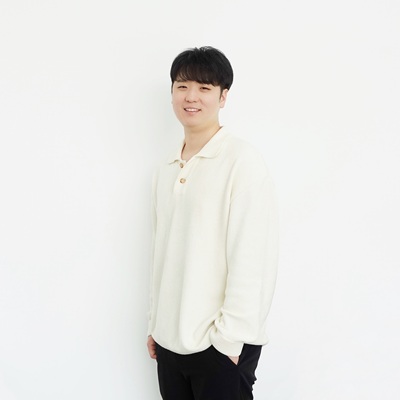
This week, we shine a spotlight on OMSCS student Minho Yeom. Keep reading to learn more about Minho's background, post-graduation plans, and more!
What is your academic and/or professional background? If you're currently working, what do you do?
I am the founder and CEO of SFACSPACE, a South Korea-based tech company operating at the intersection of artificial intelligence, media, and education. Over the past several years, I have led the company’s growth while remaining closely involved in its technology strategy and R&D. Our work spans AI-driven video automation, generative AI, visual effects, 3D reconstruction, and large-scale media datasets, with a focus on bringing emerging technologies into real-world production environments. I also collaborate with broadcasters, technology companies, universities, and public institutions to develop and apply new approaches to media production. As the company grew, I wanted to deepen my understanding of the computer science principles behind the technologies we were building, which ultimately led me to pursue Georgia Tech’s OMSCS program.
What do you like most about OMSCS, and why?
What I value most about OMSCS is the opportunity to study computer science at a rigorous level while continuing to lead a technology company and apply what I learn in real time. The program has helped me examine the technologies we work with—from artificial intelligence and software engineering to computer vision—from a more systematic and technical perspective. I also appreciate learning alongside professionals from different industries and countries, whose experiences often challenge me to think beyond my own business and technical environment. For me, OMSCS has not been separate from my professional work; it has become a framework for making better technology decisions, asking better research questions, and continuing to grow as both a founder and a technologist.
What research are you working on?
My research focuses on AI-driven media production, particularly dynamic 3D scene reconstruction, free-viewpoint video, and 3D Gaussian Splatting. In a recent peer-reviewed paper, my co-authors and I proposed DualSplat+, a method that separates foreground and background optimization to improve temporal stability in dynamic scenes, particularly under rapid motion. This work reflects my broader interest in translating advances in computer vision and generative AI into technologies that can operate in real production environments. Going forward, I hope to explore near-real-time 4D reconstruction, more efficient and controllable AI video systems, and approaches that combine large-scale media datasets with multimodal AI models. Ultimately, I want to help bridge the gap between academic research and production technology by building systems that are not only technically innovative, but also reliable and useful to creators and media organizations.
What is something someone might be surprised to learn about you?
People are often surprised to learn that I did not begin with a traditional background in computer science. I studied economics and entered technology through entrepreneurship—by building products, working with technical teams, and trying to solve real-world problems. Over time, those challenges drew me deeper into artificial intelligence, software engineering, computer vision, and research. I now see that unconventional path as an advantage: it taught me to begin with the human or industry problem and then use computer science to build something meaningful.
What are your plans after graduation?
After graduation, I plan to continue leading SFACSPACE and advance our mission of building technologies for media creation—and helping people develop the skills to use them. I want to apply the technical depth and discipline I gained through OMSCS to AI systems for video automation, generative media, and real-time 3D and 4D reconstruction that can operate reliably in real production environments. I also plan to remain active in research, pursue further publications, and deepen collaborations with universities, broadcasters, and technology partners. For me, graduation is not an endpoint; it is the foundation for a more ambitious phase of connecting computer science, entrepreneurship, and education at greater scale.
Tell us about why you feel the work that you do is significant and why it is important that you are the one doing it.
I believe media technology matters because it shapes how ideas are created, produced, and shared. Yet there is often a wide gap between promising AI research and tools that creators and organizations can use reliably. My work is focused on closing that gap. I have spent years working across company building, technical R&D, real production environments, and education, which allows me to see both what is technically possible and what people actually need. My mission is to build technologies that expand creative capability—not simply automate existing work—and to help cultivate the people who can use those technologies thoughtfully. That combination of research, execution, and education is why I believe I am well positioned to do this work.
Find Minho on...
LinkedIn: https://www.linkedin.com/in/min-ho-yeom-581654107/
Personal Website: https://sfacspace.com
Recent Stories
Deleted AI Chats May Leave Clues Behind
Tuesday, October 13, 2026
Georgia Tech Announces New Online Master’s Degree in Artificial Intelligence
Tuesday, October 6, 2026
New Neural Framework Could Make LLMs More Empathetic
Monday, October 5, 2026
OMSCS Instructors Make Summer 2026 Honor Roll
Thursday, October 1, 2026

GT Cybersecurity Expert Helping to Chart the Future of AI on the Energy Grid
Friday, September 25, 2026

Study Uncovers Security Weaknesses in Next-Generation Vehicle Technology
Thursday, September 24, 2026